Engineering and design of innovative, tailor-made plant solutions
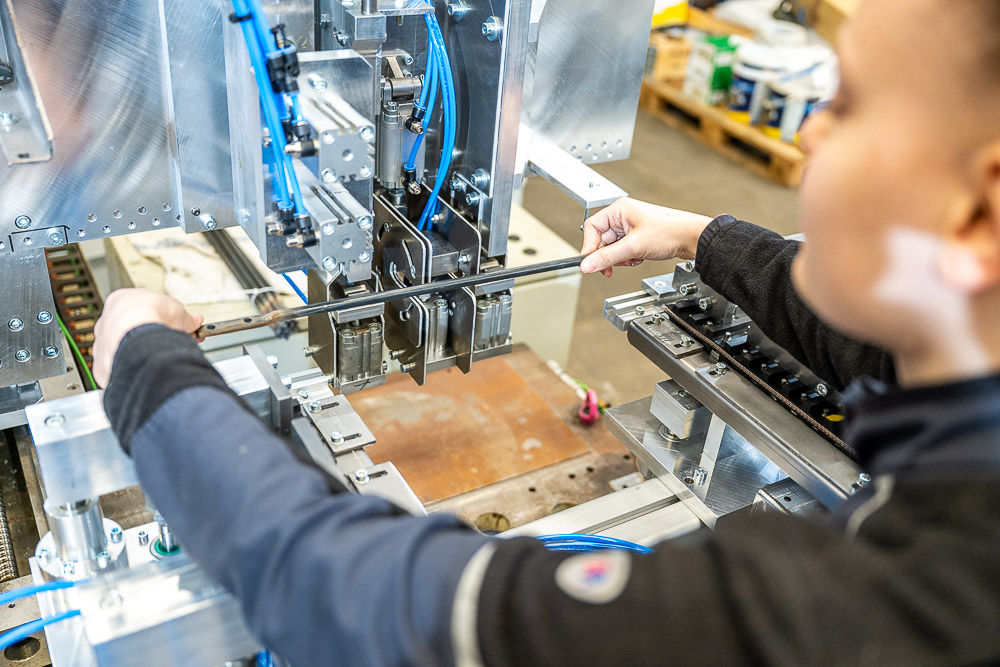
We develop and build custom machinery, manufacturing cells, and fully automated production lines for industrial applications. To ensure that customer requirements are implemented precisely and efficiently, every project follows a structured six-phase development process.
By defining requirements, risks, and critical process parameters at an early stage, we reduce the need for later modifications, minimize project risks, and create a high level of planning reliability. Our methodology ensures clear objectives, transparent decision-making, defined responsibilities, and close collaboration with our customers throughout the entire project.
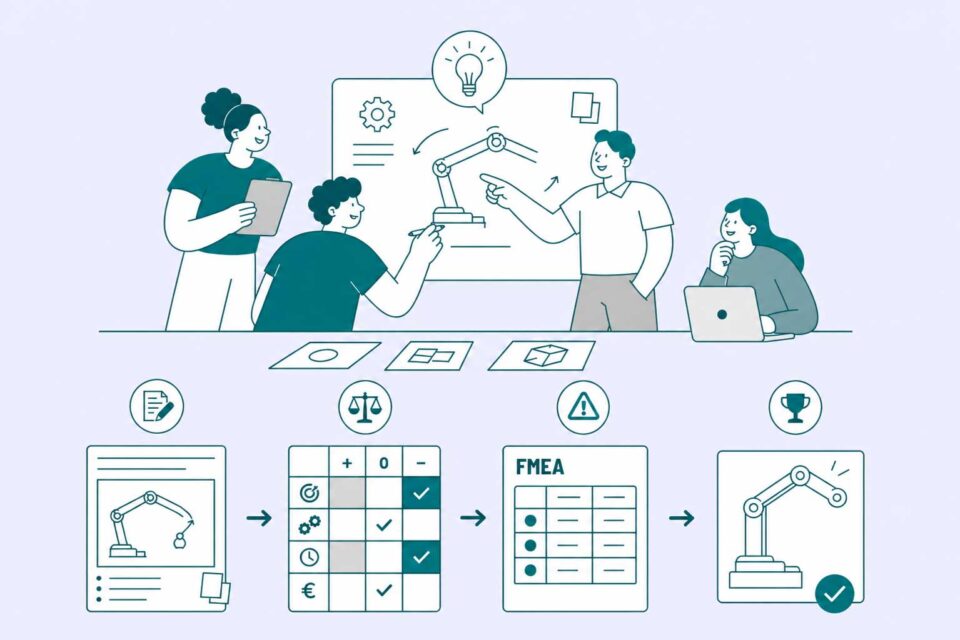
Phase 1: Defining the product
Every successful project begins with a thorough understanding of the product and its requirements. Together with product developers and experienced production specialists, we identify all relevant parameters that influence the future manufacturing process.
Phase 2: Identifying and prioritising critical processes
Successful machine development combines the customer’s product expertise with our knowledge of machine design, automation, motion control, and manufacturing technology.
All identified processes and requirements are systematically evaluated according to complexity and risk. Particular attention is given to critical processes, enabling potential risks to be identified and addressed early in the project.

Phase 3: Developing initial machine concepts
For critical process steps, we develop and evaluate multiple solution concepts in structured workshops.
Concepts range from initial hand sketches to detailed engineering proposals. Each solution is documented, compared, and evaluated using structured cause-and-effect analyses.
An early Failure Mode and Effects Analysis (FMEA) helps identify potential risks and incorporates the findings directly into further development.
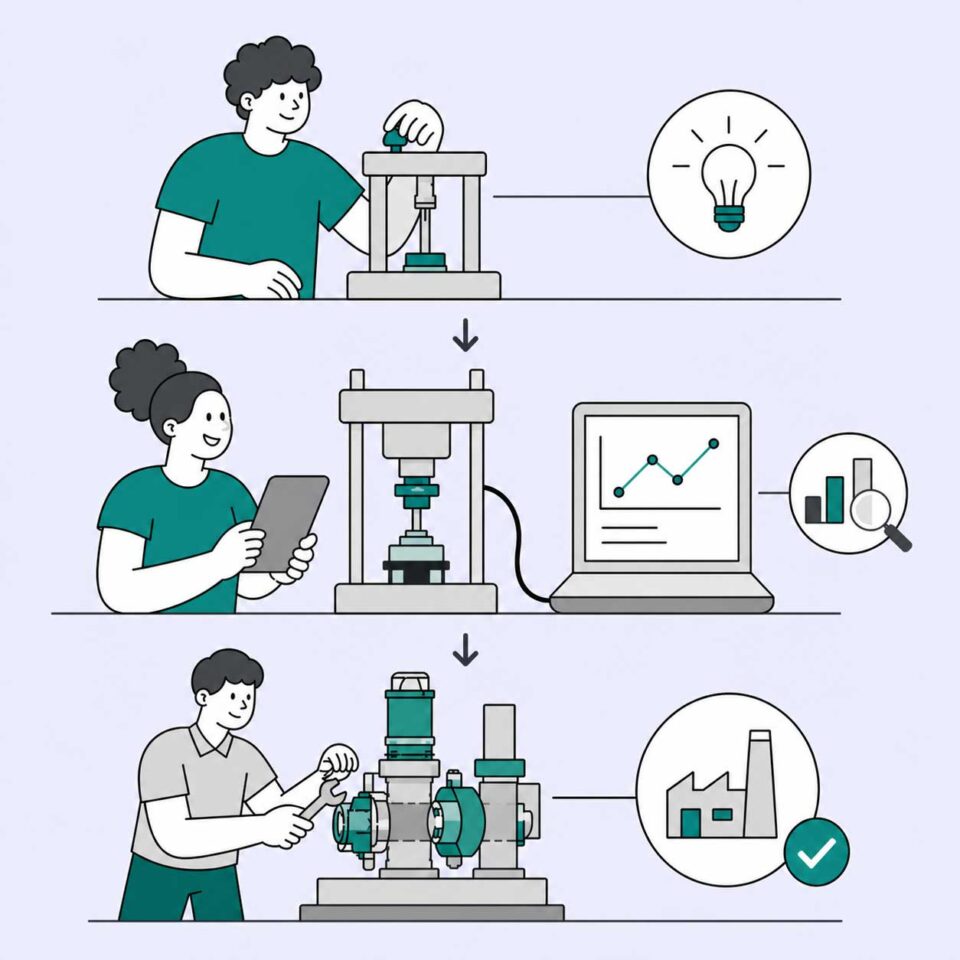
Phase 4: Validation through three levels of testing
Before machine components are designed, critical process parameters must be validated.
Stage 1: Feasibility testing
Simple experimental setups are used to verify the fundamental feasibility of a process without extensive design effort.
Stage 2: Dedicated test rigs
Purpose-built test systems enable systematic testing and quantitative analysis of critical process parameters. The resulting data is used to refine and optimize machine concepts.
Stage 3: Pre-series components
Critical machine components are manufactured and tested under conditions close to serial production. Whenever possible, these validated components are incorporated directly into the final machine design.
Phase 5: Engineering design, documentation, and final FMEA
From testing to design
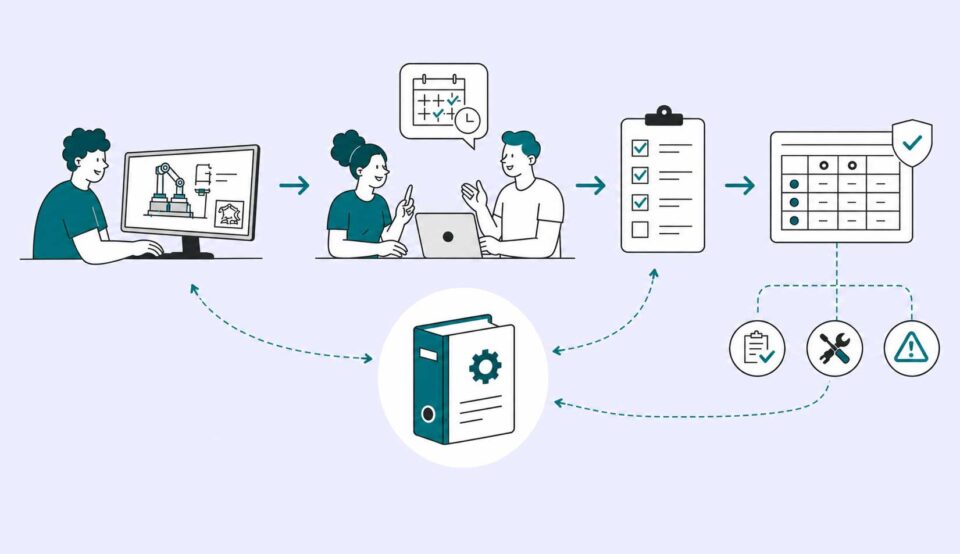
At this stage, products, manufacturing processes, and quality requirements are fully documented within the PPQ framework (Product, Process & Quality Requirements).
Based on validated test results, our engineering teams begin the detailed machine design process. Approved concepts are transformed into technical drawings, layouts, and complete production systems.
Regular reviews with the customer ensure transparency and alignment throughout development.
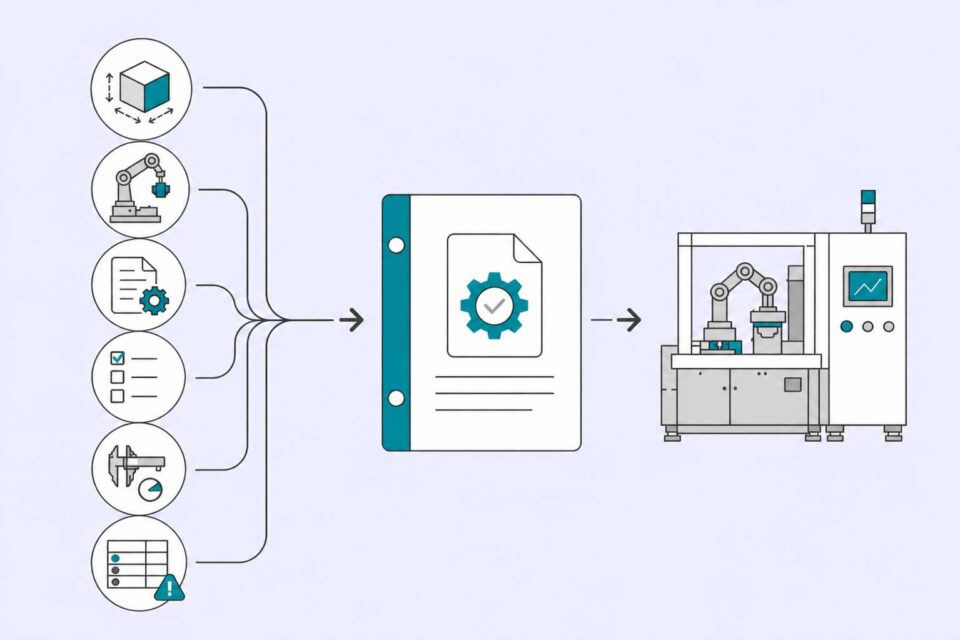
The PPQ document serves as the central reference throughout the entire project. It is continuously expanded and refined as knowledge and project maturity increase.
The completed PPQ forms the basis for the final FMEA review. All requirements are reassessed, risks are evaluated, and any remaining issues are addressed through design improvements, commissioning procedures, maintenance concepts, or documented residual risks.
To ensure consistent product quality, modern production systems often require in-process inspections or 100% quality control. Using statistical methods, we identify suitable sensors, vision systems, and measurement technologies that enable reliable and repeatable quality monitoring.
Phase 6: Specification as the basis for the order
The result of the pre-project phase
All findings from the previous phases are consolidated into a comprehensive specification document that serves as the contractual and technical foundation for the machine project.
What does the specification include?
- Complete product specifications and material requirements
- Concept sketches and machine layouts
- Manufacturing and process descriptions
- Technical requirements for each machine station
- Quality requirements, tolerances, and measurement technology
- FMEA results and derived improvement measures
The specification provides a clear, agreed-upon framework that ensures transparency, planning reliability, and successful project execution.
Back to all Services
Are you looking for a tailor-made solution for your production?
Please feel free to contact us at: